

 News
News Industry News
 In modern industrial production, agricultural breeding, environmental monitoring, and even smart home applications, the leakage and accumulation of harmful gases remain a persistent threat to safety, health, and product quality. Among these, ammonia (NH₃), a common and irritatingly toxic gas, makes its effective monitoring particularly important. Today, we proudly recommend an ammonia sensor module TE03-NH3 with UART output—offering greater ease of use and integration.
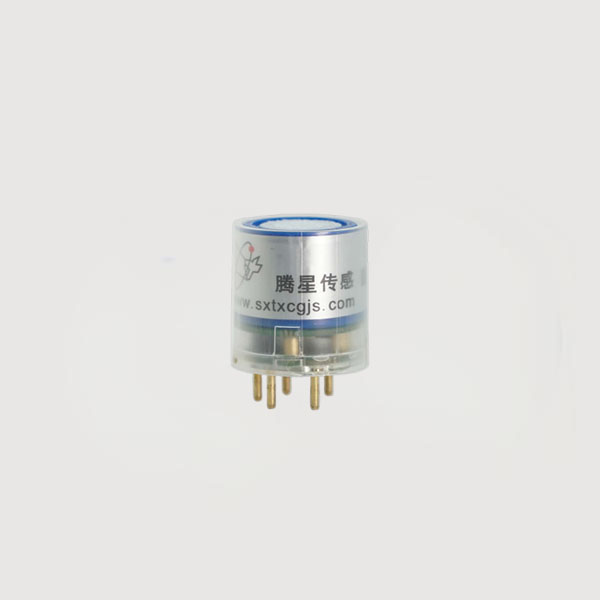
TE03-NH3 electrochemical module


Core Advantages: Why Choose a UART Output Ammonia Sensor Module?
1. High Precision and Fast Response, Ensuring Safety at Every Moment
The module utilizes a high-performance ammonia sensing element, combined with optimized signal processing algorithms, enabling accurate detection of ammonia concentration in the environment (typically covering a measurement range of 0-100ppm or wider, customizable to meet specific needs). Its fast response time quickly captures concentration changes, providing real-time, accurate data and ensuring early warnings are issued immediately when concentration levels exceed limits.
2. Digital UART Output, Simplified Integration and Enhanced Reliability
Compared to traditional analog output sensors, the UART (TTL level) digital output method is one of the module's biggest advantages:
Strong Anti-interference: Digital signal transmission effectively avoids signal attenuation and interference problems caused by long-distance wiring or complex electromagnetic environments, ensuring stable and reliable data.
Standardized Interface: UART is a standard communication interface widely supported by microcontrollers (MCUs), single-chip microcomputers, single-board computers (such as Raspberry Pi), and most industrial PLCs, greatly simplifying connection and integration with the main control system.
Plug and Play: Modules typically provide clear communication protocols (such as MODBUS protocol, custom ASCII instruction sets, etc.), eliminating the need for complex analog signal conditioning circuits (ADC, filtering, etc.). Users only need simple serial port connection and protocol parsing to obtain information such as concentration values, temperature compensation data, and module status, significantly increasing development efficiency.
Easy Networking: Multi-point monitoring networks can be easily built using UART to RS-485 modules, suitable for locations requiring large-scale, distributed ammonia monitoring.
3. Intelligent and Self-Diagnostic Functions: Advanced modules with built-in microprocessors not only handle data acquisition and processing but also feature:
Automatic Temperature and Humidity Compensation: Built-in or external temperature and humidity sensors compensate for ammonia detection values, reducing the impact of environmental factors and improving measurement accuracy across the entire temperature range.
Module Status Self-Check: Sensor status diagnostics and lifespan predictions can be performed periodically or on command, and alarm information (such as preheating status, fault indicators, etc.) can be output via UART, enabling predictive maintenance and reducing the risk of unexpected system failures.
Configurable Parameters: Users can flexibly set alarm thresholds, output data frequency, module address (when networking), etc., by sending specific commands to adapt to different application scenarios.
4. Compact Design and Low Power Consumption: The module's compact design facilitates embedding into various devices or systems. Its low power consumption makes it particularly suitable for battery-powered portable detectors or long-term unattended wireless monitoring nodes, extending device operating time.
5. Long-Term Stability and Durability: Carefully selected sensor materials and stringent manufacturing processes ensure the module's long-term stable operation in harsh industrial environments, resulting in a long service life and low maintenance costs.
Wide Range of Applications: Safeguarding Safety and Quality Across Multiple Industries
Agriculture and Livestock: Real-time monitoring of ammonia concentration in livestock and poultry sheds (chicken houses, pig houses, etc.), timely activation of ventilation systems, improved animal welfare, increased growth efficiency, and disease prevention.
Food Cold Chain and Warehousing: Monitoring potential ammonia leaks in cold storage facilities (especially systems using ammonia refrigeration), ensuring the safety of warehouse personnel and food safety.
Chemical and Pharmaceutical Industries: Leakage monitoring during the production, storage, or use of ammonia as a raw material, ensuring the safety of personnel in the plant area and compliance with safety production regulations.
Environmental Monitoring and Remediation: Used for monitoring ambient air quality in waste treatment plants, sewage treatment plants, and other locations, evaluating the effectiveness of remediation efforts.
Smart Homes and Building Automation: Integrated into fresh air systems or air quality monitors to ensure air quality in indoor environments such as homes, offices, and schools.
Research and Laboratories: Providing precise concentration monitoring methods for various experiments involving ammonia.
Portable Detection Equipment: As a core detection unit, rapidly developed into a handheld ammonia detector for on-site inspections and emergency detection.
Our TE03 module can detect not only NH3, but also a range of other gases such as H2S, O3, and HCl. Please feel free to contact us if you have any needs:
Web: www.tensensor.com
Email: [email protected]
WhatsApp: +86 18335818384
 Message
 E-mail
 Whatsapp


